
Child Pop Stars and Their Fans and Critics on YouTube
Access my thesis here: Cyborg Talentification: YouTube as a Hotspot for Child Pop Stars, their Fans, and Critics
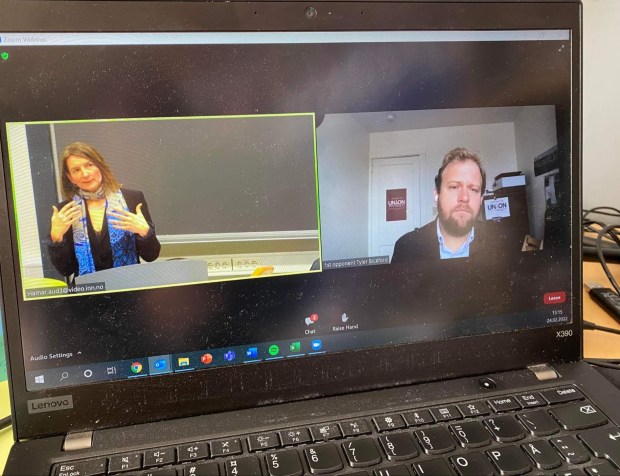
First opponent Professor Tyler Bickford (view International Contacts) had the following to say about my research: I think this is a genuinely valuable contribution, and especially as an American scholar I was very pleased to learn about Norwegian child stars and to reflect on how they are recognizably part of a global system of child musical celebrity but also participate in specifically Norwegian and European public spheres and media industries in ways that suggest interesting possibilities for further research. Therefore I understand this work as making a significant contribution to the international study of children’s music and media.
By analyzing and discussing YouTube comment fields, and music and interview videos by three Norwegian cases of child pop stars – The BlackSheeps, Marcus & Martinus and Angelina Jordan – I identified online musical talent as the result of a comprehensive co-creation process, called cyborg talentification.
This qualitative study shows how YouTube produces specific notions of child pop stars, their musical talent, and their artistic persona. It examines how these performances, together with the artists’ own musical interpretations, affect the development of their careers, both online and offline.
Defence Facts:
- First opponent: Associate Professor Tyler Bickford (University of Pittsburgh, USA)
- Second opponent: Associate Professor Åsa Bergman (University of Gothenburg, Sweden)
- Chair of the Evaluation Committee: Associate Professor Kai Arne Hansen (INN University)
- Chair of the public defence: Professor Susan Lee Nacey
- Main supervisor: Professor Ingeborg Lunde Vestad. Co-supervisor: Professor Petter Dyndahl http://petterdyndahl.no/professor.html
My PhD position has been funded by the Research Council of Norway (the programme FRIPRO-FRIHUMSAM) through the project DYNAMUS – The Social Dynamics of Musical Schooling and Upbringing, 2018-2022. INN University is the project owner with the Norwegian Academy of Music as a partner. Professor Petter Dyndahl (INN University) is the project manager.
Mapping Context
The close relationship between man and machine, the possibility of an anonymous user identity, and the blurring of clear distinctions between private and public, children and adults, present and future, make characteristic contributions to the talentification processes on YouTube. The thesis sheds light on the ethical and conceptual conflicts and opportunities that lie in this breakdown of traditional categories.
Main findings:
- The artists’ music videos and fans’ comments are archived, commented on, and shared on YouTube. This means that the stars’ digital footprints “immortalize” their child star status. This can be challenging when artists try to establish a new artistic identity later in life.
- Child stars’ talent and authenticity, as communicated on YouTube, are closely linked to their – constructed – innocence, a matter which has been discussed by other researchers, as Tyler Bickford (2020), Jacqueline Warwick (2016), and others.
- Musical talent, as it appears on YouTube, is a dynamic and context-dependent trait that is cocreated in an identifiable process, which I have named cyborg talentification.
- The artists’ accessibility on social media creates a close, online relationship with fans that is challenged in the physical space. In this sense, online music videos can counteract and diminish offline concert experiences, but, not unlike the Beatlemania phenomenon, they may also amplify these.
- The term cyborg talentification, or just talentification, put into a music pedagogical context, represents an innovative approach to musical talent.
- Internet communication, as practiced on YouTube, is a specific form of communication in which traditional concepts are challenged, covered, and transcended, which also affects perceptions of musical talent.
- Child stars on YouTube use distinctive musical strategies that show that they interpret and translate pop music in their own unique way, which also places them in a cultural cosmopolitan context. These strategies are supported, but also opposed, by YouTube mechanisms. I have analyzed them by understanding them as interpretive reproductions (Corsaro, 2918).
- The informal learning platform YouTube has governing mechanisms that can facilitate unique musical learning experiences and online Bildung.
- Social media (as YouTube) both reflect and settle society’s expectations of talent, while at the same time they create their own versions of talent which in turn can influence offline perceptions of musical talent in music institutions and music classrooms.

I also found that Child popstars’ accessibility on interactive social platforms created intimate, net based connections from star to fans that were, if not completely unworkable, so certainly challenged in the physical space. Online music video experiences were found to, partly, reduce and counterwork offline concert experiences, yet, not unlike the Beatlemania phenomenon, they were at the same time found to (re)enforce offline music experiences and talent perceptions. Together, online and offline, accelerated the talentification processes og the artists I investigated.
References:
Corsaro, W. A. (2018). The sociology of childhood (5th ed.). Sage.
Bickford, T. (2020). Tween pop. Children’s music and public culture. Duke University Press.
Warwick, J. (2016). “You can’t win, child, but you can‘t get out of the game”: Michael Jackson’s transition from child to superstar. In G. E. McPherson (Ed.), Musical prodigies: Interpretations from psychology, musicology, and ethnomusicology (pp. 716–732). Oxford University Press.
 Music, Media, and Education